
Your Ultimate Retreat Planning Checklist (from a Retreat Consultant Who’s Seen It All)
So you’ve decided to host a retreat.
Amazing, it’s truly the best feeling. Hosting a retreat can be one of the most fulfilling, connective, and transformational things you’ll ever do in your business. It brings you and your clients closer, deepens your service delivery and gets you out from behind your desk or the 4-walls of your studio and into the real world.
It’s my favourite time of the year when I welcome my guests through the villa gates here in sunny Spain.
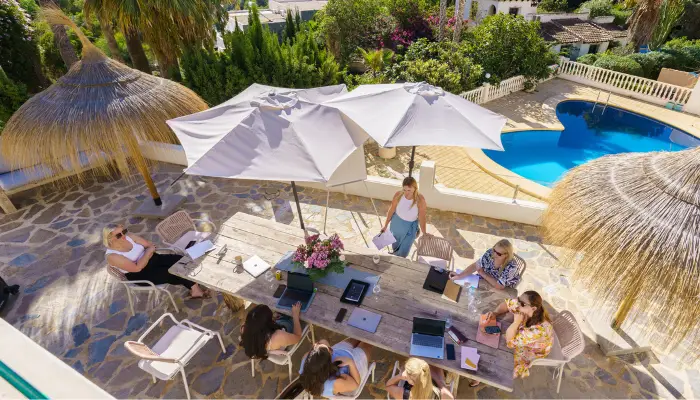
But before you start dreaming about Mediterranean villas and group dinners under fairy lights, let’s talk about the reality.
There are a lot of moving parts.
And unless you have a clear retreat planning checklist to follow, it’s easy to end up in panic mode a few weeks before guests arrive.
I’ve supported incredible founders as a retreat planning consultant, and I’ve seen the same mistakes again and again; from last-minute logistics, unclear budgets, missing information, and all-nighters spent printing workbooks. Let’s make sure that’s not you.
Here’s a calm, realistic checklist that walks you through everything you need to plan your retreat smoothly and profitably.
🧭 Step 1: Define your Purpose and Vision for your Retreat
I know you’re excited and you’ve been saving venues, but before you book anything, get clear on your why.
Ask yourself:
- What transformation do I want guests to have?
- Who is this retreat for?
- What do I want it to do for my business? (Lead generation? Brand positioning? Profit?)
- How do I want it to feel; calm and restorative, or dynamic and high-energy?
Without clarity here, every other decision becomes harder and your marketing becomes almost impossible.
Your “why” drives your pricing, your location, your activities, and even your guest list.
💸 Step 2: Create a Budget and Pricing Plan
This is where most new hosts wing it and where most problems start. My retreats hit 50% profit margin but it’s not without proper financial planning.
A clear retreat budget checklist should include:
- Venue and accommodation costs
- Catering and food
- Guest gifts or welcome packs
- Travel (yours and any guest experts)
- Insurance, permits, or local taxes
- Marketing and sales costs
- Contingency buffer (at least 10%)
Once you know your total costs, calculate how many guests you need to make your desired profit.
If you’re guessing your prices, you’re probably undercharging and running at a loss. Retreats are a lot of work to not make any money from it.
🏡 Step 3: Choose the Right Venue
Your venue sets the tone for everything.
When comparing options, look for:
- Accessibility (distance from the nearest airport or train station as well as supporting any mobility requirements)
- Facilities that match your activities (space for yoga, workshops, meals- consider weather conditions too)
- Private vs shared rooms and bathrooms
- Catering options and dietary flexibility
- Cancellation and deposit terms
Pro tip: If you can’t get there in-person, ask for high-resolution photos of every room and outdoor area before signing anything. What looks “rustic” online can sometimes mean “broken shower and goats at dawn.” If people are paying you ££££ then the accommodation is key to their experience.

🗓 Step 4: Build Your Timeline
Your retreat planning timeline should start at least six+ months before your event.
Here’s a rough guide:
|
Timeframe |
Key Focus |
|
6 months out |
Confirm venue, dates, and pricing |
|
5 months |
Build sales page and start marketing |
|
4 months |
Open bookings and confirm first deposits |
|
3 months |
Finalise guest list, suppliers, and activities |
|
2 months |
Review logistics, guest comms, and travel |
|
1 month |
Confirm catering, schedules, and final payments |
|
2 weeks |
Send welcome packs and travel info |
|
1 week |
Final checks and team briefing |
|
Post-retreat |
Guest follow-up and feedback |
💬 Step 5: Communicate Clearly with Your Guests
Your guest communication can make or break the experience. Use automated workflows and structured processes to send:
- Welcome confirmation and what’s included
- Packing list
- Travel directions
- Dietary preferences form
- Final reminder one week before the retreat
The more organised you are here, the calmer your guests (and you) will feel, especially in the lead-up to the retreat you’ll be busy and it’s easy to forget to send an important email.
⚙️ Step 6: Set Up Your Systems
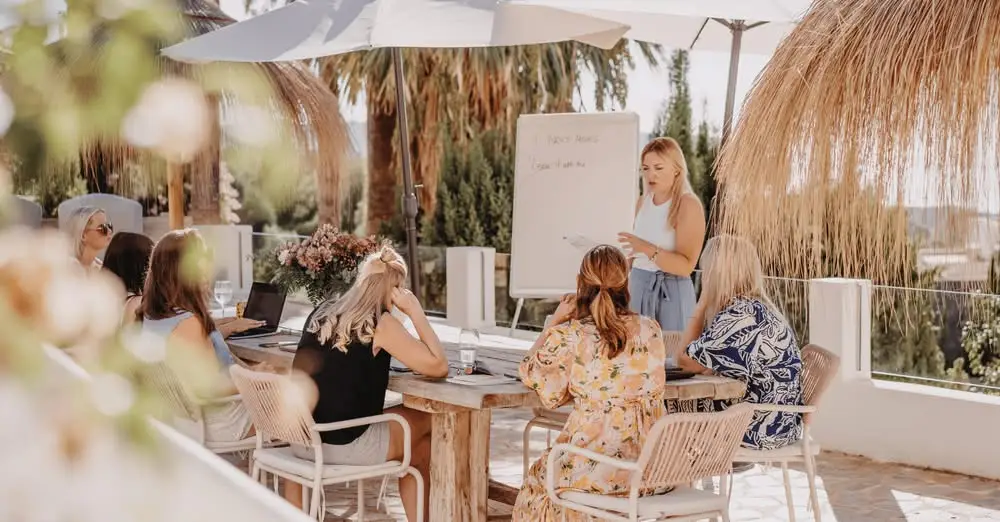
This is where you start thinking like a retreat planning consultant (welcome to my brain)
Create a central system, in Notion, ClickUp, or a spreadsheet that holds:
- Your master task list
- Supplier contacts
- Guest information
- Payment tracker
- Schedule templates
- Marketing plan
This means everything is in one place, and you can easily reuse it for your next retreat instead of starting from scratch. Think rinse and repeat.
🧘♀️ Step 7: Protect Your Energy and Time
Hosting a retreat is emotional work. You’re holding space for others while managing logistics. It’s easy to burn out if you don’t plan for yourself too. I learned a lot of lessons when hosting my first retreat and my second one was 10x better for my guests and for me.
Before the retreat starts:
- Block one full rest day before and after
- Delegate what you can
- Have backup plans for food, transport, and emergencies
- Set your phone on “Do Not Disturb” when guests arrive
You’re not just a facilitator here, you’re a human being who deserves to enjoy the experience too. Protect your energy at all costs. It takes a lot out of you to be ‘on’ for a whole week (even if you count yourself as sociable.)
☀️ Step 8: Post-Retreat Follow-Up
Once everyone’s gone home, don’t close the laptop just yet. Remember to send a thoughtful thank-you message, request testimonials, and note what went well and what didn’t.
This debrief will save you weeks of stress next time and the sooner you can do it the better. I send myself quick voice notes throughout my retreats and then transcribe them after so nothing gets forgotten.
If you’re serious about running retreats regularly, then creating this feedback loop is essential for ongoing improvements.
Retreats are powerful and profitable, but they only feel that way when they’re well planned.
A checklist keeps you focused, but the real magic is in the structure behind it.
If you’d rather not piece it all together yourself, I can help.
I offer personalised retreat planning services from marketing strategy to logistics and operations, while you plan your first (or next) retreat.
Let’s make your retreat simple, strategic, and profitable.
You can learn more about my packages here: Retreat Planning Consultancy