
Moving to Spain did not make me feel brave overnight. It simply placed me in situations where I had to keep going before I felt ready.
From the outside, relocation can look like one clean decision. You pack your life, board a plane and begin again somewhere sunnier. But starting over is rarely one moment. It happens in layers: the first time you cannot explain yourself properly, the first document you do not understand, the first day you realise that the person you were back home is not automatically visible in your new country.
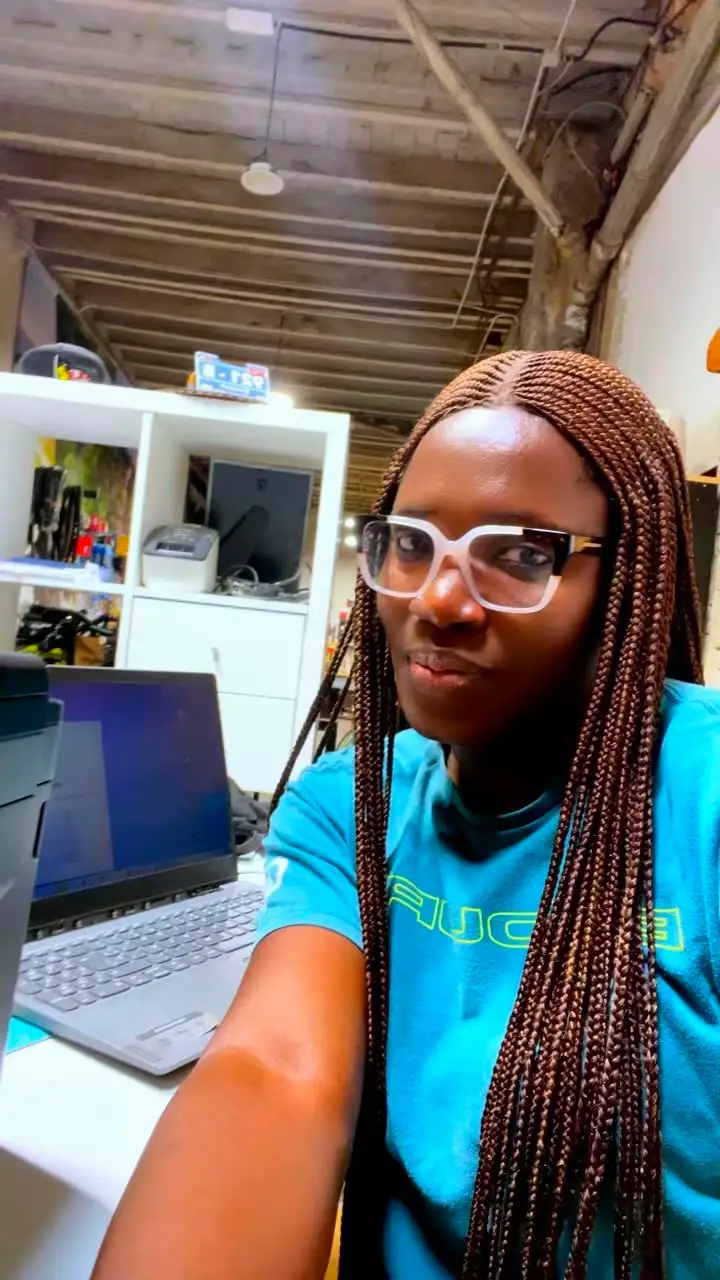
I am a Nigerian woman living in Barcelona, married into a Spanish family and raising a child between cultures. My experience is not the experience of every African woman; Africa is far too large and our lives are far too varied for that. But I know I am not alone in the questions that followed me here: Where do I fit? How do I remain myself while learning a new way of living? How do I rebuild confidence, community and financial independence when so much of what once made me feel capable is no longer obvious to other people?
This is the part of moving to Spain that a relocation checklist cannot fully prepare you for.
Starting over begins before you arrive
Before I could build a life in Barcelona, I had to get here. My family visa process took around eight months. During that period, people around me could see only that I was still in Nigeria while my husband was in Spain. They could not see the legalisation, translations, appointments, uncertainty and waiting behind the scenes.
When a move depends on immigration approval, your life can begin to feel like a file being passed from one office to another. Your marriage becomes evidence. Your future becomes a list of documents. Even when you have done everything correctly, you may still have no clear answer to the simplest question: when will I be able to go?
I eventually learned not to treat the delay as a verdict on my future. While I waited, I started a business in Nigeria. It gave me something constructive to hold onto and reminded me that one delayed part of my life did not require every other part to stop.
That lesson stayed with me after I arrived in Spain: when the larger answer is taking time, find the next useful thing you can do today.
For anyone preparing to move, the practical work matters. Confirm the correct immigration route for your situation, check current requirements with official authorities, organise physical and digital copies of every document, and allow more time than the shortest estimate you find online. My detailed account of applying for a family visa in Spain with a Nigerian passport explains the process I experienced, but rules can change and individual cases differ.
The address changes before your identity catches up
Arriving does not immediately create belonging.
You can learn the route to the supermarket, register at the town hall, recognise the rhythm of your neighbourhood and still feel as if part of you is standing outside your own life, watching it happen.
Some of this is language. Barcelona has both Spanish and Catalan woven into daily life, and even small efforts to understand the languages can change how connected you feel. But belonging is not only about vocabulary. It is also about context: the jokes you do not yet understand, the family traditions everyone assumes are obvious, the unspoken rules of social life and the exhaustion of constantly translating more than words.
When you move as an adult, you arrive with a full history that nobody around you has witnessed. They do not know the work you have done, the rooms you have led, the difficulties you have survived or the version of you that felt completely at ease. You may know exactly who you are and still find yourself having to introduce that person from the beginning.
That can feel like losing status, confidence or even personality. It is not necessarily any of those things. Sometimes you are simply operating without the familiar mirrors that used to reflect you back to yourself.
Keep evidence of who you are. Stay connected to the people who know your full story. Continue doing something that makes you feel competent, whether that is working, cooking, creating, studying, volunteering, exercising or caring for others. Integration should expand you; it should not require you to erase yourself.
Being visible and invisible at the same time
As an African woman in Spain, you may be visibly different before anyone knows anything else about you. At the same time, the complexity of who you are can become invisible.
People may notice your skin, hair, accent or name, yet know nothing about your country, education, family, faith, ambitions or sense of humour. Some questions will come from genuine curiosity. Others may reveal assumptions you did not volunteer to carry.
There is no single correct way to respond. You do not have to educate everyone. You do not have to make yourself smaller to avoid attention, and you do not have to turn every uncomfortable moment into a confrontation. You are allowed to decide which conversations deserve your energy.
What helped me was refusing to let other people’s limited information become my definition. I can be Nigerian, a wife in a Spanish family, a mother in Barcelona, a businesswoman and a woman still discovering new parts of herself. None of those identities cancels the others.
This is also why community matters. There is relief in meeting women who do not need a long explanation of what it means to build a life across countries. Costa Women exists for women living in or considering a move to Spain, and its community spans locations across the country. Barcelona also has international welcome activities, cultural associations, professional networks, parent groups and neighbourhood communities. Do not wait until you are lonely to look for connection.
Community is not an optional extra
Many women approach relocation as a list of practical tasks: residence documents, housing, work, schools and healthcare. Those things are essential. But community belongs on the list too.
A support network helps with the things Google cannot answer. Which administrative office is easier to navigate? Where can you find food that tastes like home? Which local event is genuinely welcoming? Who can recommend a reliable professional? Where can your child meet other multicultural families? Most importantly, who can sit with you when you do not need advice, only someone who understands?
Building community requires repetition. One event may not create a friendship. One conversation may feel awkward. Go again. Join a group around something you genuinely care about rather than networking only because you think you should. Offer help as well as asking for it. Familiarity grows through ordinary contact.
Costa Women reports a community of 12,500 members from 127 countries and local events across Spain. That scale matters, but the real value of any network is personal: one useful introduction, one honest conversation and one person who makes a new city feel less anonymous.
Your relationship with work may change
One of the least discussed parts of moving abroad is what happens to your professional identity.
Qualifications may not translate neatly. A previous role may be difficult to reproduce. Language, childcare, documentation or local hiring practices may narrow your options. If your move is connected to a partner, it can be especially easy for your own work to become the flexible part of the family plan.
There is nothing wrong with a season of dependence, caregiving or adjustment. The danger is assuming that the season must become your permanent identity.
Financial independence is not only about salary. It is also about agency: having skills you continue to develop, understanding the household finances, maintaining professional relationships, creating options and knowing that you can contribute in a way that respects your current reality.
My own path has included employment, business, content creation and building digital resources. I did not begin with a perfect online strategy or a large audience. I began by paying attention to what I knew, what people asked me about and what I could build around family life.
For some women, the right next step will be a local job. For others, it may be retraining, freelancing, a service business, consulting, a digital product or a combination of several small income streams. The internet does not remove the need for skill, trust and consistency, but it can make your experience portable.
Barcelona Activa offers entrepreneurship support, training and programmes for women at different stages, including women with an early idea and women already growing a business. Resources like these are worth exploring because rebuilding does not have to be a private struggle carried out entirely through trial and error.
Motherhood adds another country to the conversation
Raising a child between cultures makes belonging more concrete.
It appears in language, food, names, celebrations, family expectations and the question of which stories your child will inherit. Your child may move naturally between worlds that still require conscious effort from you.
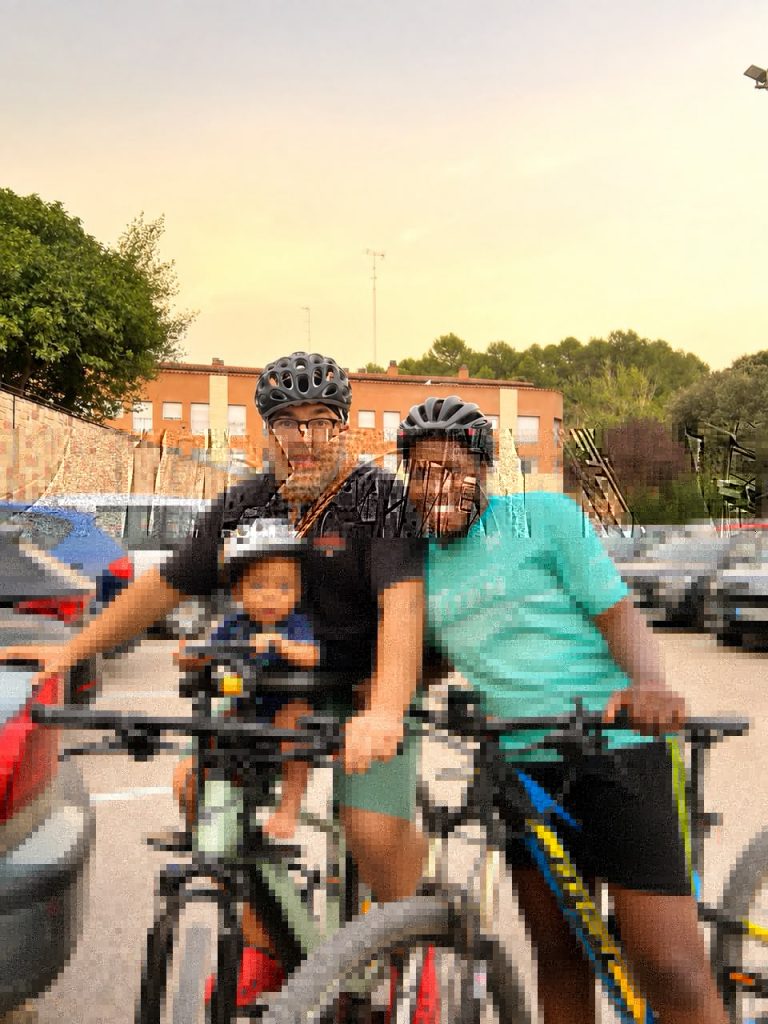
There can be pressure to choose the “right” way: the Nigerian way, the Spanish way, the way your extended family expects, or the way other parents in Barcelona seem to be doing it. I am learning that a multicultural family is not a competition between traditions. It is a home where we decide intentionally what to keep, what to adapt and what to create for ourselves.
This also requires protecting your own connection to home. Cook the food. Tell the stories. Use the names. Make the calls. Let your child see that their African heritage is not a distant explanation but a living part of family life.
At the same time, allow Spain to become real rather than remaining the country you are merely enduring until your next visit home. Learn the local rhythms. Build relationships. Participate. Belonging grows when you stop treating your current life as a waiting room.
What I wish I had understood earlier
If you are moving to Spain or rebuilding after arrival, these are the truths I would keep close.
Prepare for the paperwork, but also prepare for the emotional transition. A beautiful city does not cancel loneliness, and gratitude does not require you to pretend every day is easy.
Learn enough of the language to participate. Perfection can come later. Being willing to try opens doors that silence keeps closed.
Build a life that is not entirely borrowed from your partner or family. Find your own places, routines, interests, friendships and work.
Do not compare your first chapter with another woman’s tenth year in Spain. You may be seeing the result of connections, language and confidence she spent years building.
Keep developing your ability to earn. Even if you are not ready to work immediately, continue learning, documenting your experience and noticing the problems you are equipped to solve.
Ask for practical help early. Official newcomer services, reputable immigration professionals, employment and entrepreneurship organisations, schools, parent groups and established communities can save you time and unnecessary isolation.
Finally, allow two truths to exist together. You can love Spain and miss Nigeria. You can be grateful for your marriage and still grieve the independence you once had. You can feel at home and foreign on the same day. Mixed feelings are not proof that you made the wrong decision.
Questions women often ask about starting over in Spain
Is Spain a good place for an African woman to live?
No country offers one universal experience. Your city, legal status, work, language, finances, family situation and support network will shape daily life. Spain can offer community, culture and opportunity, but it also requires preparation and patience. Speak to women whose circumstances resemble yours, not only people selling an idealised relocation story.
What should I organise before moving to Spain?
Confirm your visa or residence route through official sources, gather and correctly legalise or translate documents, budget for delays, research housing and healthcare, and keep copies of everything. Also identify at least one community or professional resource before arrival. Practical preparation and human connection are equally important.
How do I find community after moving?
Start with one shared point: location, profession, motherhood, language, culture, faith, sport or business. Attend consistently, introduce yourself, ask genuine questions and follow up with people individually. Large communities become useful when you turn one broad membership into a few real relationships.
Can I rebuild a career or business after relocating?
Yes, but the route may look different from the career you left. Map your transferable skills, learn what the local market requires, improve language where needed and use credible support such as Barcelona Activa or professional networks. If traditional work is temporarily difficult, consider ethical online services or resources built around a real skill or useful experience—not promises of instant income.
You do not have to disappear in order to belong
Starting over in Spain has taught me that belonging is not something a country hands you at the airport. It is something you build through language, relationships, work, family life and the quiet decision to keep showing up as yourself.
There will be moments when you feel behind because you are learning things other people learned years ago. There will be days when a simple task takes more energy than it should. There may also be a morning when you give someone directions without thinking, a family gathering where you understand the joke, a friendship that no longer feels new, or a piece of work that reminds you how capable you are.
Those moments are small, but they are how a life becomes yours.
If you are at the beginning, you do not need to solve your entire future today. Understand the next document. Learn the next phrase. Attend the next event. Send the next application. Develop the next skill. Introduce yourself to the next woman.
Starting over does not mean starting from nothing. You arrived with knowledge, history, resilience and a perspective that did not disappear when your address changed. Spain may be the place where you learn to use all of it differently.
Author bio
Edith Otavero is a Nigerian writer and digital educator in Barcelona, sharing honest stories and practical guidance on life abroad, motherhood, personal growth and sustainable digital income through momentwithedith.